Notable Achievements
- Neon Wallet – US$1B+ in traded volume
- Multilaser Runin – Embedded in 20M+ devices
- iTrack – 50M invoices; 60k couriers; 2k companies
- Apptite – US$1.6M GMV; 100k orders; 50k users
- Sharity – R$2M in donations; 100k users
- Desabafa – 700k posts
Skills
Backend
Web Frontend
AI Engineering
Web3
Languages
Other
I began my software development journey as a self-taught learner in middle school and pursued a technical programming course in high school. After high school, I worked as a full-stack web developer and then earned a Computer Science degree, gaining valuable experience at various companies, including NIC.br. There, I specialized in full-stack web and native Android development. Later, I co-founded Simpli, a startup that grew into a successful software house, delivering diverse projects, including blockchain development. This period helped me evolve as both a developer and a leader.
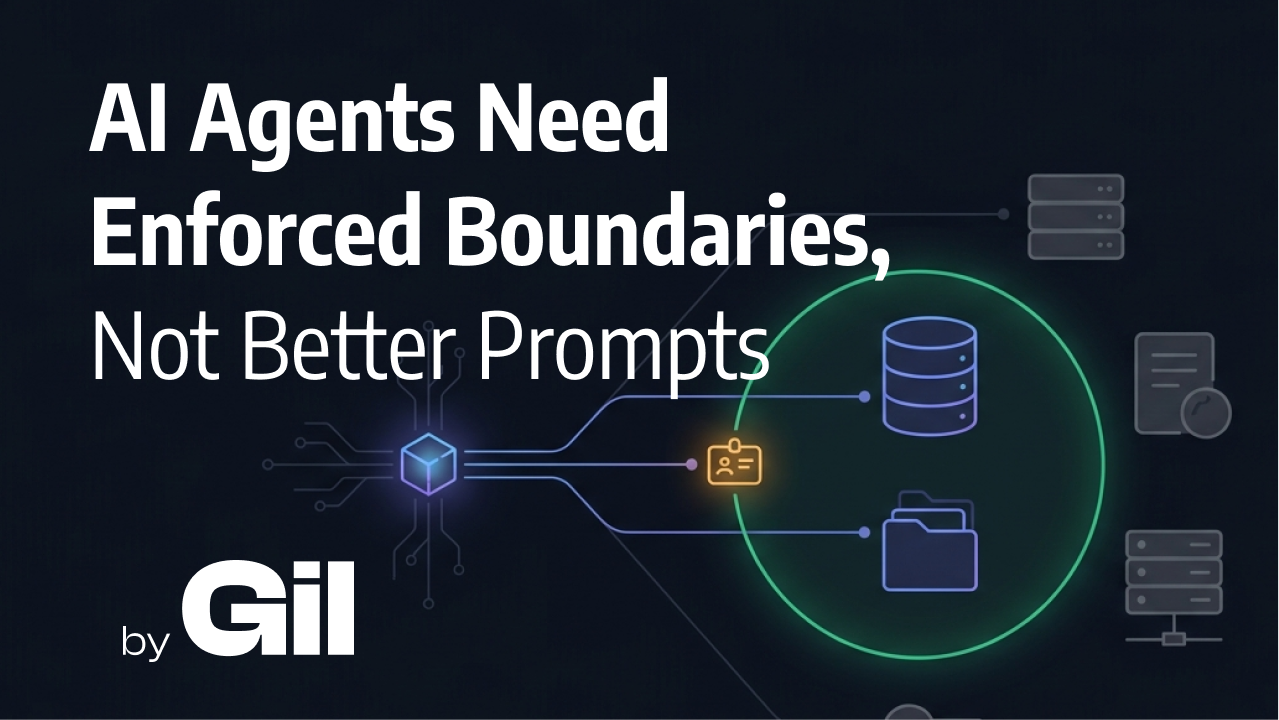
AI Agents Need Enforced Boundaries, Not Better Prompts
Two 2025 incidents, an agent that deleted a production database and one that nearly wiped a codebase, weren't prompt failures. They were boundary failures. A look at why AWS's security team, OWASP, and Okta are all converging on treating coding agents as a scoped, first-class identity, and why the same instinct has to extend to code review, not just access.
Anthropic Killed the Cheapest Way to Add AI to Your App
MCP officially deprecates Sampling on July 28 — the feature that let a third-party app borrow a user's own AI subscription instead of paying for inference itself. A look at which clients ever actually implemented it (Claude Desktop and Claude Code never did), why the "low adoption" rationale is circular, and the one pattern for free AI in your app that survives the change.
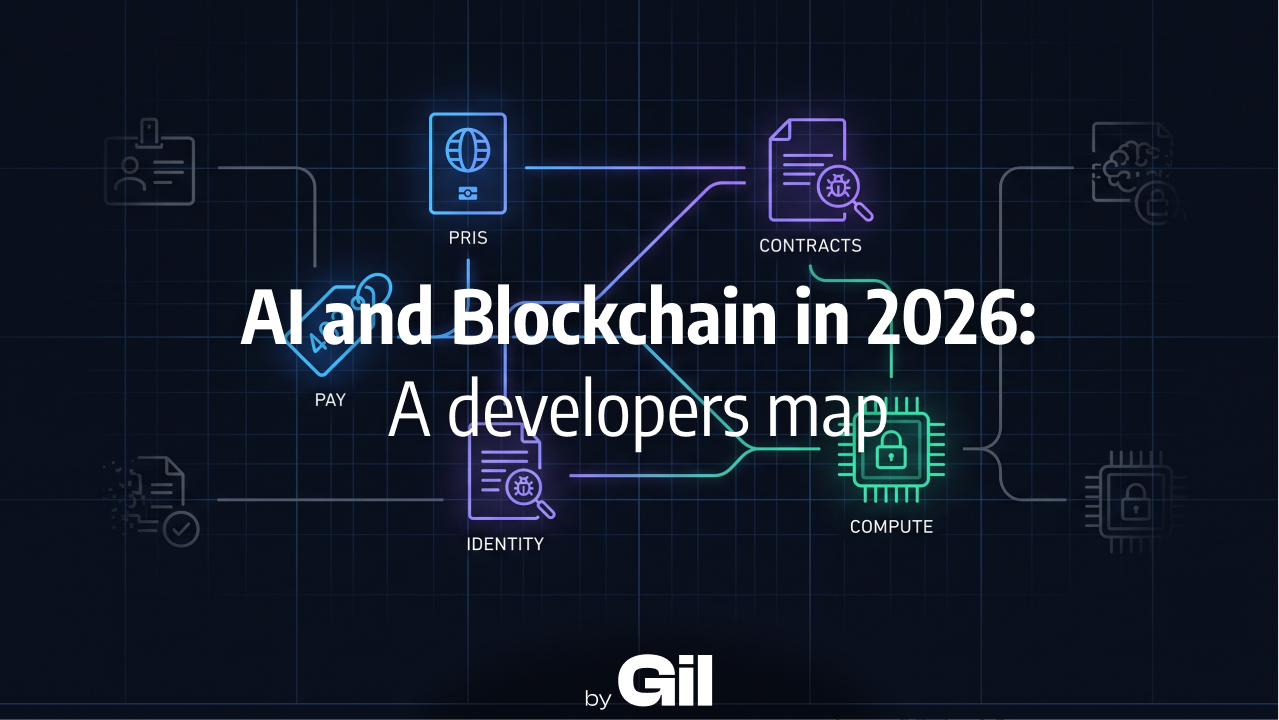
AI and Blockchain in 2026 - A Developers Map
A developer's field guide to where AI and blockchain actually meet in 2026: agent payments with x402, on-chain agent identity with ERC-8004, AI in the contract writing and audit loop, and decentralized compute with verifiable inference. It separates what genuinely shipped from what's still a demo, and points to where a developer can start.
What AWS Blocks Is Really For
AWS Blocks is a new open-source TypeScript framework that turns your backend code into the AWS infrastructure that runs it, an approach called Infrastructure-from-Code. This piece covers what Blocks actually does, how it compares to earlier IFC tools like Encore.ts and Nitric, the lock-in and single-Lambda trade-offs worth watching, and why AWS's backing might finally push Infrastructure-from-Code into the mainstream.
Discovery and Spec: The Missing Harness in AI-Assisted DeFi Development
Harness Engineering has two layers. The CI pipeline is one of them. This is the other — a structured discovery and spec workflow that constrains AI before it writes a single line of Solidity.
Work Experience
33Labs
•At 33Labs (formerly 33Audits), I've designed and implemented scalable backend services and application architecture for decentralized financial products.
The company began as a security auditing firm, which has given me daily experience preventing vulnerabilities in production systems. I've worked end to end — architecture, implementation, and automated testing — with security engineers involved throughout. This led me to a key conviction: review should start at the architecture stage, before any code is written. To support it, I built developer tooling and AI-assisted workflows that improved the team's productivity.
Simpli
•I co-founded Simpli and, over 11 years, led engineering teams of up to 30 developers, including 5 team leads, and delivered 50+ production software projects — distributed enterprise systems for logistics, fintech, media, education and SaaS clients, plus our own proprietary platforms. I defined software architecture, technical roadmaps, engineering standards and delivery processes, and built scalable backend services using Java, Kotlin, Node.js, TypeScript, MySQL/PostgreSQL and REST/GraphQL APIs.
We started Simpli as a two-person startup building a B2C mobile product and pivoted within its first year into a software house delivering custom distributed applications, scaling organically through consistent delivery and client satisfaction. I played a key role in shaping both the technical direction and the business strategy, ranging from hands-on technical leadership to driving innovation through research, process design and early adoption of emerging technologies such as mobile and blockchain.
Provisioning AWS infrastructure was a recurring part of that work. Across 50+ projects, I standardized it: a checklist for spinning up new accounts, a baseline set of IAM roles, and a reusable Terraform starter kit so no project's infrastructure started from scratch — the same template became a paved road that sped up every project's first deploy. Cost management started reactively, triggered by a client flagging a high AWS bill, but past a certain point I put anomaly-alert triggers in place instead of waiting for the next complaint.
Simpli · Neon Wallet
•Led the architecture of a production mobile application for secure digital asset management, with over $1 billion in traded volume, and later contributed to its desktop counterpart. Responsibilities included application architecture, backend and API integration, multi-network connectivity, secure authentication, managing multiple accounts simultaneously, WalletConnect integration, the protocol for network communication, and performance optimization.
Simpli · Sharity
•Sharity was a crowdfunding platform for charitable causes that I built from creation through scaling, growing it past 100 thousand users. It was eventually sold to Abacashi, a bigger competitor, and I was invited to lead the engineering side of that merger in recognition of the quality of Sharity's system — refactoring Abacashi's legacy C#/Angular codebase over to Node.js and React with the platform staying live the whole time, using a Strangler Fig strategy to migrate it piece by piece instead of a big-bang rewrite. One example of the work on Sharity itself: a standalone event-driven achievements service, given its own stores from day one because its write path ran far heavier than the donation path and outgrew Sharity's transactional MySQL. Events flowed through SNS and SQS; counters lived in DynamoDB, with idempotency from a conditional transaction on each event's ID, so duplicates just aborted. Progress bars ran over WebSockets, leaderboards on Redis sorted sets, and chained challenges unlocked once on completion, needing no global ordering. It was reused as-is inside Abacashi after the merger.
Simpli · NDapp
•NDapp earned its way into becoming the official dApps gallery of the Neo network on its own merit — its traction and the quality of its data got it adopted and featured on the network's official site, not built as an official project from day one. I worked on defining the initial project structure and building its first functionalities, including the indexer and analytics pipeline behind the catalog. That meant reconciling three genuinely different chains — NeoLegacy, Neo N3, and Neo X — each with its own RPC shape and contract metadata format, into one consistent data model with automatic updates: polling each network on its own cadence, normalizing every chain-specific quirk, and keeping every dApp's stats fresh without one network's hiccup stalling the other two.
Simpli · Wow Talents
•Wow Talents was a comprehensive agency platform connecting child models with modeling opportunities, supporting subscription payments and five distinct user types — models, guardians, agency staff, clients, and admins — each with its own view and permissions. I owned it end to end: turning a loosely defined set of demands into functional requirements and wireframes, designing the database architecture, and structuring the project from scratch. One example of that structuring work: since every model account belonged to a minor, every read and write had to be scoped through a guardian relationship as well as a role, so I designed the permission model around both the user type and that guardianship chain — letting new user types and rules get added later without touching the core matching logic.
Simpli · LDC's She Digital
•Louis Dreyfus Company, one of the largest commodity traders in the world, commissioned a 'Safety, Health, and Environment' management platform for use across all its global units — each with its own local regulations, forms, and reporting requirements. I owned it end to end: architecture, development, and integration with Azure Active Directory for authentication and user management. The core challenge was translating that sprawl of per-unit requirements into one flexible application instead of one branch per country, so I modeled forms, fields, and workflows as configurable data instead of hardcoded screens — letting a compliance team in a new unit stand up its own SHE process by configuring the platform, not by requesting a code change and a deploy.
Simpli · Jamef Customers Dashboard
•Jamef, the largest shipping company in Brazil, needed a new dashboard for customers to track delivery data, but the existing one suffered from severe performance problems. My scope started as frontend-only, but tracing the slowness back to its source pulled me into the data layer. I introduced a caching layer and a server-side pagination policy for the result set, taking a query that took 8 seconds down to a few milliseconds. I delivered a complex dashboard with several customized graphs and contributed to restructuring the underlying central system.
Simpli · iTrack
•I was the lead engineer who built iTrack Brasil from the ground up, owning its system design through its first two years and scaling it into a B2B delivery platform integrating multiple systems, with nearly 60,000 couriers and over 50 million invoices processed across 2,000 registered companies — growth that led to its acquisition by MadeiraMadeira in 2021. Simpli carried it through that acquisition and ran it three more years before handing it over in 2024, with me on it as CTO, coming back alongside the team when the work needed the depth. One of those returns: a billing alarm fired, Cost Explorer put the spike on Postgres at fiscal month-end, and Performance Insights traced it to clients posting invoices one per request instead of in batch — a transaction, and a WAL flush, per invoice, which no instance class fixes. Ingestion moved behind an SQS queue with concurrent workers committing in batches, autoscaled on backlog per worker, and that fix exposed a second write load underneath: courier position pings, which moved to Redis for last-known position with Parquet history on S3.
Simpli · Mapix
•Mapix connects students with their school drivers, giving children and parents predictability and safety while simplifying route planning and communication for drivers. I owned the planning and structuring of the solution end to end and built its most critical components: the route-building system, in-app chat, and a live GPS mode. One example of that work: building a route wasn't just point-to-point — each van carried several students with different pickup and drop-off points on a shared trip, so the routing logic had to sequence stops for the whole group at once, and the GPS mode had to keep parents' ETAs accurate against a background location stream over unreliable mobile connections, without draining a driver's phone battery on a multi-hour shift.
Simpli · Apptite
•Apptite was a food delivery app for iOS, Android and the web. It gained recognition with acceleration by '500 Startups' and media coverage that established it as an important platform in the artisanal food market. I was the main engineer responsible for the platform from its initial planning and structuring through scaling it as it grew. One example of that scaling work: the dish recommendation engine. The map was discretized into cells holding the stores that served each area, updated in batch, so the geographic lookup was a cached read; personalization then combined signals in parallel over that filtered set, with the heavier estimates precomputed offline.
Simpli · Desabafa
•Desabafa was an anonymous social network built for emotional support and mutual understanding, and it went on to receive media recognition in the mental health sector while reaching 700 thousand posts. I was responsible for planning, structuring, and building the platform, including its moderation and safety systems. One example of that work: anonymity was the whole point of the product, so any moderation approach that relied on identifying users to punish or filter them was off the table. I built the safety layer around behavior instead of identity — rate-limiting and pattern detection on posting activity, plus keyword and pattern-based flagging tuned for crisis language — so harmful content and abuse could be caught and escalated without ever unmasking a user.
Simpli · Band Radios App
•Bandeirantes, one of Brazil's largest media conglomerates, has run Band Radios since 1937 and selected my team in 2014 to modernize its mobile app. I served as lead developer for both the Android and iOS apps. One example of the technical work: streaming ran over UDP, and the naive approach — opening the connection only after a listener picked a station — meant a noticeable delay before audio started. I pre-established the UDP connection ahead of the station choice instead, trading a bit of idle network and battery use for audio that started the instant a user tapped a station.
Simpli · Multilaser Runin
•Multilaser, one of Brazil's largest cell phone and tablet manufacturers, faced high demand for quality control testing that had been done by hand on the assembly line. I led development of the Android app that automated it instead — running CPU, RAM, GPS, screen brightness, and touch checks — and it has since tested over 20 million devices. One example of that work: each check had its own pass/fail criteria and its own margin for hardware variance, so the real problem wasn't running the tests, it was collapsing five independent, noisy hardware signals into one deterministic pass/fail a line worker could act on in a couple of seconds, fast enough to keep up with a production line moving tens of thousands of units.
Simpli · Enclave Wallet
•Enclave is an application for secure digital asset management, built so non-technical users can onboard as smoothly as in a traditional web app. It combines Abstract Accounts, WebAuthn authentication and sponsored transactions, paired with a full on-chain activity explorer. In a small team, I owned the product vision, usability and the entire frontend, contributed to the backend services it relies on, and led the system design of the indexer and API behind the explorer. One example of that indexing work: handling chain reorgs. Every block was stored keyed by its own hash and its parent's, so detecting a reorg meant walking back parent hashes until the indexer found one it already had — the fork point. From there, the orphaned blocks and the balances derived from them were invalidated, and the canonical chain was replayed forward through idempotent handlers, so reprocessing never double-counted a transaction.
Simpli · Letter
•In partnership with the Associated Press, Dapper Labs and COZ, Letter is a distributed authentication platform that lets systems validate access in a decentralized manner. I architected the solution: services on both networks (Neo and Flow), a reusable SDK that integrates both simultaneously behind one interface, and several key integrations.
Jodobix
•Jodobix is a decentralized betting game designed to be fully fair and autonomous. It leverages blockchain technology to eliminate intermediaries and guarantees that all betting value is distributed among players and contributors. I developed the entire project on my own, including the design of secure random number generation strategies that do not rely on trusted third parties.
BuidlGuidl Batch Program
•BuidlGuidl is one of the most impactful builder communities in the Ethereum ecosystem. One of its core initiatives is the Batch Program, which helps onboard new developers into the Ethereum space. As a mentor in the program, I guide participants through their first steps contributing to open source using Solidity, Hardhat, Wagmi, and Next.js.
COZ
•COZ is the first and most well-known group of developers on the Neo network, renowned for numerous significant projects within the ecosystem. After years of partnership, I was honored to be invited to join the group's board of directors.
SIMET - NIC.br
•At NIC.br, I worked on SIMET, Brazil's official internet quality measurement tool used by regulators and ISPs alike. The flagship SIMET application still ran as a Java Applet at a time when browsers were starting to lock those out for security reasons, so I proposed and led its migration to plain JavaScript before that became an emergency. Beyond the core tool, I built SimetMapas, visualizing internet quality heat maps across Brazil, and dashboards consumed directly by internet operators and regulatory agencies. I also contributed to SimetBox, a Wi-Fi router built to run these tests automatically, and to an Android testing app with its own custom graphics library for rendering results on constrained hardware.
FingerPrint, Escala, NetStartup
•My first three engineering jobs — web applications in PHP and Java, JavaScript front-ends and MySQL.
33Labs
•At 33Labs (formerly 33Audits), I've designed and implemented scalable backend services and application architecture for decentralized financial products.
The company began as a security auditing firm, which has given me daily experience preventing vulnerabilities in production systems. I've worked end to end — architecture, implementation, and automated testing — with security engineers involved throughout. This led me to a key conviction: review should start at the architecture stage, before any code is written. To support it, I built developer tooling and AI-assisted workflows that improved the team's productivity.
COZ
•COZ is the first and most well-known group of developers on the Neo network, renowned for numerous significant projects within the ecosystem. After years of partnership, I was honored to be invited to join the group's board of directors.
Simpli
•I co-founded Simpli and, over 11 years, led engineering teams of up to 30 developers, including 5 team leads, and delivered 50+ production software projects — distributed enterprise systems for logistics, fintech, media, education and SaaS clients, plus our own proprietary platforms. I defined software architecture, technical roadmaps, engineering standards and delivery processes, and built scalable backend services using Java, Kotlin, Node.js, TypeScript, MySQL/PostgreSQL and REST/GraphQL APIs.
We started Simpli as a two-person startup building a B2C mobile product and pivoted within its first year into a software house delivering custom distributed applications, scaling organically through consistent delivery and client satisfaction. I played a key role in shaping both the technical direction and the business strategy, ranging from hands-on technical leadership to driving innovation through research, process design and early adoption of emerging technologies such as mobile and blockchain.
Provisioning AWS infrastructure was a recurring part of that work. Across 50+ projects, I standardized it: a checklist for spinning up new accounts, a baseline set of IAM roles, and a reusable Terraform starter kit so no project's infrastructure started from scratch — the same template became a paved road that sped up every project's first deploy. Cost management started reactively, triggered by a client flagging a high AWS bill, but past a certain point I put anomaly-alert triggers in place instead of waiting for the next complaint.
Simpli · Enclave Wallet
•Enclave is an application for secure digital asset management, built so non-technical users can onboard as smoothly as in a traditional web app. It combines Abstract Accounts, WebAuthn authentication and sponsored transactions, paired with a full on-chain activity explorer. In a small team, I owned the product vision, usability and the entire frontend, contributed to the backend services it relies on, and led the system design of the indexer and API behind the explorer. One example of that indexing work: handling chain reorgs. Every block was stored keyed by its own hash and its parent's, so detecting a reorg meant walking back parent hashes until the indexer found one it already had — the fork point. From there, the orphaned blocks and the balances derived from them were invalidated, and the canonical chain was replayed forward through idempotent handlers, so reprocessing never double-counted a transaction.
Simpli · Neon Wallet
•Led the architecture of a production mobile application for secure digital asset management, with over $1 billion in traded volume, and later contributed to its desktop counterpart. Responsibilities included application architecture, backend and API integration, multi-network connectivity, secure authentication, managing multiple accounts simultaneously, WalletConnect integration, the protocol for network communication, and performance optimization.
Simpli · LDC's She Digital
•Louis Dreyfus Company, one of the largest commodity traders in the world, commissioned a 'Safety, Health, and Environment' management platform for use across all its global units — each with its own local regulations, forms, and reporting requirements. I owned it end to end: architecture, development, and integration with Azure Active Directory for authentication and user management. The core challenge was translating that sprawl of per-unit requirements into one flexible application instead of one branch per country, so I modeled forms, fields, and workflows as configurable data instead of hardcoded screens — letting a compliance team in a new unit stand up its own SHE process by configuring the platform, not by requesting a code change and a deploy.
Simpli · Jamef Customers Dashboard
•Jamef, the largest shipping company in Brazil, needed a new dashboard for customers to track delivery data, but the existing one suffered from severe performance problems. My scope started as frontend-only, but tracing the slowness back to its source pulled me into the data layer. I introduced a caching layer and a server-side pagination policy for the result set, taking a query that took 8 seconds down to a few milliseconds. I delivered a complex dashboard with several customized graphs and contributed to restructuring the underlying central system.
Simpli · iTrack
•I was the lead engineer who built iTrack Brasil from the ground up, owning its system design through its first two years and scaling it into a B2B delivery platform integrating multiple systems, with nearly 60,000 couriers and over 50 million invoices processed across 2,000 registered companies — growth that led to its acquisition by MadeiraMadeira in 2021. Simpli carried it through that acquisition and ran it three more years before handing it over in 2024, with me on it as CTO, coming back alongside the team when the work needed the depth. One of those returns: a billing alarm fired, Cost Explorer put the spike on Postgres at fiscal month-end, and Performance Insights traced it to clients posting invoices one per request instead of in batch — a transaction, and a WAL flush, per invoice, which no instance class fixes. Ingestion moved behind an SQS queue with concurrent workers committing in batches, autoscaled on backlog per worker, and that fix exposed a second write load underneath: courier position pings, which moved to Redis for last-known position with Parquet history on S3.
Simpli · Apptite
•Apptite was a food delivery app for iOS, Android and the web. It gained recognition with acceleration by '500 Startups' and media coverage that established it as an important platform in the artisanal food market. I was the main engineer responsible for the platform from its initial planning and structuring through scaling it as it grew. One example of that scaling work: the dish recommendation engine. The map was discretized into cells holding the stores that served each area, updated in batch, so the geographic lookup was a cached read; personalization then combined signals in parallel over that filtered set, with the heavier estimates precomputed offline.
Simpli · Multilaser Runin
•Multilaser, one of Brazil's largest cell phone and tablet manufacturers, faced high demand for quality control testing that had been done by hand on the assembly line. I led development of the Android app that automated it instead — running CPU, RAM, GPS, screen brightness, and touch checks — and it has since tested over 20 million devices. One example of that work: each check had its own pass/fail criteria and its own margin for hardware variance, so the real problem wasn't running the tests, it was collapsing five independent, noisy hardware signals into one deterministic pass/fail a line worker could act on in a couple of seconds, fast enough to keep up with a production line moving tens of thousands of units.
SIMET - NIC.br
•At NIC.br, I worked on SIMET, Brazil's official internet quality measurement tool used by regulators and ISPs alike. The flagship SIMET application still ran as a Java Applet at a time when browsers were starting to lock those out for security reasons, so I proposed and led its migration to plain JavaScript before that became an emergency. Beyond the core tool, I built SimetMapas, visualizing internet quality heat maps across Brazil, and dashboards consumed directly by internet operators and regulatory agencies. I also contributed to SimetBox, a Wi-Fi router built to run these tests automatically, and to an Android testing app with its own custom graphics library for rendering results on constrained hardware.
FingerPrint, Escala, NetStartup
•My first three engineering jobs — web applications in PHP and Java, JavaScript front-ends and MySQL.
A selection of projects — the complete history, including those under Notable Achievements, is at https://gil.solutions
Education
Pontifícia Universidade Católica de São Paulo (PUC-SP)
•Bachelor's degree in Computer Science from Pontifícia Universidade Católica de São Paulo, one of Brazil's leading higher education institutions.
AI Agents Need Enforced Boundaries, Not Better Prompts
Two 2025 incidents, an agent that deleted a production database and one that nearly wiped a codebase, weren't prompt failures. They were boundary failures. A look at why AWS's security team, OWASP, and Okta are all converging on treating coding agents as a scoped, first-class identity, and why the same instinct has to extend to code review, not just access.
Anthropic Killed the Cheapest Way to Add AI to Your App
MCP officially deprecates Sampling on July 28 — the feature that let a third-party app borrow a user's own AI subscription instead of paying for inference itself. A look at which clients ever actually implemented it (Claude Desktop and Claude Code never did), why the "low adoption" rationale is circular, and the one pattern for free AI in your app that survives the change.
AI and Blockchain in 2026 - A Developers Map
A developer's field guide to where AI and blockchain actually meet in 2026: agent payments with x402, on-chain agent identity with ERC-8004, AI in the contract writing and audit loop, and decentralized compute with verifiable inference. It separates what genuinely shipped from what's still a demo, and points to where a developer can start.
What AWS Blocks Is Really For
AWS Blocks is a new open-source TypeScript framework that turns your backend code into the AWS infrastructure that runs it, an approach called Infrastructure-from-Code. This piece covers what Blocks actually does, how it compares to earlier IFC tools like Encore.ts and Nitric, the lock-in and single-Lambda trade-offs worth watching, and why AWS's backing might finally push Infrastructure-from-Code into the mainstream.
Discovery and Spec: The Missing Harness in AI-Assisted DeFi Development
Harness Engineering has two layers. The CI pipeline is one of them. This is the other — a structured discovery and spec workflow that constrains AI before it writes a single line of Solidity.